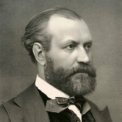
Gounod, Charles
Composer Information
Charles Gounod was a French composer, best known for his Ave Maria (based on a work by Bach) as well as his opera Faust. Another opera by Gounod, occasionally still performed, is Roméo et Juliette. Gounod was born in Paris, the son of a pianist mother and an artist father. His mother was his first piano teacher. Under her tutelage, Gounod first showed his musical talents. He entered the Paris Conservatoire, where he studied under Fromental Halévy and Pierre Zimmermann (he later married Zimmermann's daughter). In 1839, he won the Prix de Rome for his cantata Fernand. He was following his father; François-Louis Gounod (d. 1823) had won the second Prix de Rome in painting in 1783. During his stay of four years in Italy, Gounod studied the music of Palestrina and other sacred works of the sixteenth century; these he never ceased to cherish. Around 1846-47 he gave serious consideration to joining the priesthood, but he changed his mind before actually taking holy orders, and went back to composition. During that period, he was attached to the Church of Foreign Missions in Paris. [source from Wikipedia]
Work
- Philemon and Baucis
- Sapho, CG 1
- Faust, CG 4 (Opera)
- Faust, CG 4 (English Version)
- Romeo and Juliet, CG 9
- Symphony No. 2 in E flat major
- Mireille, CG 8
- Funeral March of a Marionette
- Ave Maria, CG 89a
- Repentance - O Divine Redeemer
- 6 Melodies